Showing posts with label Developmental Psychology. Show all posts

4.21.2014

TV and video games and its relation with inattention and wellbeing: some thoughts


Television and video games are commonly seen as addictive and harmful when taken in larger doses. Parents and educators often question themselves about the right amount of stimulation that children receive when watching TV or playing video games. Teachers are often complaining about the volatility of attention and the short span attention, a characteristic of some children and individuals with attention deficits, that are believed to be linked to this new world of overstimulation and persistent connectedness to the digital world.

There are some really interesting points in this discussion that should make us think about the relation of attention deficits, its disorders and the contextual factors that embodies them.

First, attention deficits have to be taken into account concerning a particular background, frequently a task that the individual is trying to achieve, e.g., homework. We know that the longer periods of attention are hard, that being the reason why we usually make pauses during our work. However, attention deficits or alterations mean that the focus of attention is impossible to obtain or when achieved it's quickly lost. This leads the individual to lack commitment to the task at the hand and, this way, fail to execute.

Second, attention deficits have an intricate nature of the rest of cognitive and emotional systems. This means that the lack of attention can be derived by normal stimuli in the environment (e.g., disturbing peer in the classroom), in the self and consciousness (e.g., worry of failure) and/or in a disturbed sense of lack of homeostasis (e.g., as in ADHD, primarily hyperactive, the inability to control one's cognitive and behavioural sense of motion). In consequence, the sense of loss of control dictates a response.

Third, in the best case scenario, this will be reversed and the individual will be able to respond favourably, leading to the reasoning that makes the disconnection from the source of stimulation possible (e.g., the child turns the TV off), which in turn rewards the child with a sense of control over her actions and environment. It may also lead to an inner conflict that it is hard to resolve, on where the gratification of the immersive experience of the video game of the TV show is more enticing and prevalent than the voice of discipline and attention. This voice can be internal, eliciting an I-position (e.g., I as inattentive or I as bad student), or a position of an other (e.g., the voice of disapproval from the parent). However, it may be that this response is briefly considered in contrast with an alternative but in such a way that makes it almost irrelevant to the inner discussion, as it isn’t even valued as meaningful (e.g., I don’t give a sh*t about school, I do what I want, I always fail so what’s the point?).

Fourth, there is a sense of wholeness to our experience in our existential configuration that makes respond to an imbalance with a sense of action. The learning cycles about the experiences of inattention and the ability to respond according to what is expected (e.g., focus on homework, do the chores) or to fail in that regard, in the large configuration of one’s identity, are so powerful that affect not only the initial problem of inattention – and consequently all the discussion around TV and video games, for example – but, more importantly, the place of the individual in his world.

In an altered version of the CBT terms, the emotional, the cognitive and behavioural, consolidates solid beliefs in the individual, which in turn validate the assumptions that are made in the specific cases of inattention but, more importantly, the personal I-Self-O positions of identity.

The hardwired composite nature of our identities, in the intricate connections with the world, where our identities exist, makes TV and video consumption much more complex to evaluate. The question of how much TV and video games is too much is probably related to a very wide array of factors: parental norms, rules and expectations, children’s habits and routines, family harmony, children’s performance at school and their relations with the peer group, types of programs that are watched, specific health issues, such as eye strain, lack of exercise and obesity… Well, the factors are so varied that ultimately that they may include cultural norms and expectations, specific school norms and expectations, developmental stages…

You have noticed that my focus was on inattention, as it usually seen as one of the most relevant implications of too much TV and video games consumption. I would add internet use, of course. It is important, nonetheless, to present the broader and related perspective of this relation to wellbeing.

According to this study:

On the whole, after accounting for all of these factors, there were very few associations between electronic media use and wellbeing indicators. For girls, every additional hour they spent playing electronic games (either on consoles or on a computer) on weekdays was associated with a two-fold increase in the likelihood of being at risk for emotional problems – for example being unhappy or depressed, or worrying often. For both boys and girls, every extra hour of television watched on weekdays was associated with a small (1.2- to 1.3-fold) increase in the risk of having family problems – for example, not getting on well with parents, or being unhappy at home. A similar association was found for girls between weekend television viewing and being at risk of family problems. However, no associations were found between watching television or playing games and problems with peers, self-esteem or social functioning.

And as we defend, the relation is nuanced:

It may well be the case that families who watch lots of television are not providing as much support for young children’s wellbeing from an early stage – so the association with television or game use is more to do with poor family functioning than the media themselves. Furthermore, the results don’t tell us anything about what types of television or genres of games might have the strongest effects – presumably the content of such media is important, in that watching an hour of Postman Pat will have very different effects on a four-year-old’s wellbeing than watching an episode of Breaking Bad. And as the authors note, relying on subjective reports from parents alone might introduce some unknown biases in the data – “an objective measure of electronic media use or inclusion of teacher or child report of wellbeing may lead to different findings”, they note. So the results should be treated with a certain amount of caution, as they don’t tell us the whole story. Nevertheless, it’s a useful addition to a now-growing body of studies that are trying to provide a balanced, data-driven understanding of how modern technologies might affect childhood development.

Common sense is one of our most powerful tools and it is free. Parents are expected to regulate and supervise the consumption of TV, video games and the internet, as every immersive experience tends to glue the individual to a pleasurous context where immediate gratification occurs. Parental practices are, therefore, crucial to mediate a balance consumption of these contexts.

4.14.2014

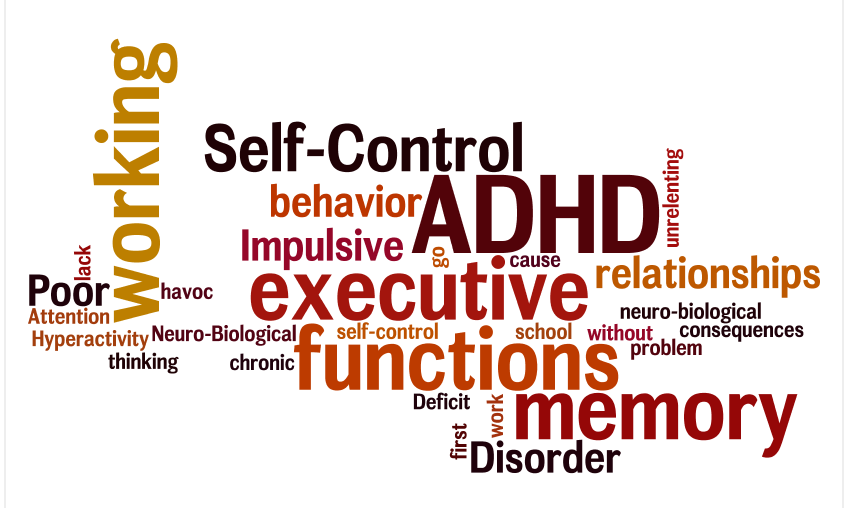
Is it really ADHD?


Following on the last post about the abuse that has been made to the definition of ADHD, the article published on the April 2014 Monitor on Psychology by the American Psychology Association gives an interesting analysis to this serious topic and the explosion of the demand for ADHD medications.

What exactly is leading to the growing number of new ADHD diagnoses? Is there a true increase in the disorder — or are we simply expanding our definition of it, or are more aware of it? And why is the chance of receiving an ADHD diagnosis twice as high in Southern states as in Western states?

And more importantly, as it is said, like many other disorders, ADHD is assessed by a symptom checklist based analysis, where the criteria definition works perfectly for static realities. Well, in our real world, entities and their actions are much more fluid and complex, as presented in my last post. The importance of this factor is immense, as it underlines that nosological criteria have to be submitted to the spectrum analysis, which is to say that the limits of inclusion and exclusion are not so clear as the DSM, psychologists and other professionals tend to consider.     

The hard part is that ADHD is just like depression, just like autism, just like schizophrenia in that it's a symptom-based mental disorder. We don't have a blood test or a brain scan yet that's definitive. I believe that ADHD is a real condition, but it's on a spectrum, just the way that high blood pressure and autism are. It's always a bit arbitrary as to who is actually above the cut and who is below because we don't know exactly where the cut is.

To prove that science does not exist in the void, the researchers made an interesting conclusion concerning the discrepancy of the rates of diagnosis of ADHD in the US. They came to understand that the more you focus on controlling the factors of performance - and the links that it has to the different levels of education in the society - the more professionals tend to diagnose ADHD.

What we found was that standards-based education reform had likely played a large role in the nation's huge increase in ADHD diagnoses. Between 2003 and 2007, in those 20 states that didn't get consequential accountability until No Child Left Behind was implemented, we found a 59 percent increase in ADHD diagnoses among children who were within 200 percent of the federal poverty limit — so among the poorest kids in the state. Among middle- or upper-class kids in those states, there was only a 3 percent increase in ADHD diagnosis. That's a huge and statistically significant difference.

Which lead to conclude that when test scores really, really count in the public schools, for the poorest kids in a state, ADHD diagnoses go up dramatically shortly thereafter.

This means that teachers and schools are often tempted to use the diagnosis of ADHD when dealing with children that have very low performance, in order to justify why students fail to perform at the level that is expected. This doesn't mean that teachers and schools are the ones that are putting the stamp on the disorders and they are crucial in their information concerning the assessment process. 

This is also important because it gives a credible explanation to the proved signs of indiscipline and its relation to the underachievement of students. Having been in these situations, where the easy route is to take one of the most accepted and credible labels there is, it is important to be truthful to science and, more importantly, to the children and their uniqueness. 

I always recall to this effect, the case of a 8-year-old student that was taking Ritalin and failing at the school, showing signs of inattention, provocation with peers and impulsivity, which were in the outside great candidates for the credible - but abusive - justification of ADHD. One might even ask why he was already taking Ritalin - that falls off the scope of this post -, but the most important aspect here is that this student was going through episodes of Enuresis, Nocturnal and Secondary, according to the DSM-IV-TR. The approach, therefore, focused not on the signs of inattention and impulsivity but, more importantly, on the important signs of the mother-son dyad and attachment concerns that were negative patterns of self-other functioning. Cause vs symptom, map vs territory.

Going to back our case that cultural norms and school policies have great importance in how ADHD and other diagnoses are made and used, the researchers affirm that school policies really seem to matter, in a way that factors such as ethnicity, medical professionals and culture don't. Can we say they're the absolute and only cause of these state and regional differences? No, but they sure seem to be implicated.

If some children really need the medication, others really don't, especially those who take them to enhance their performance:

There's also the whole issue of the use of medications for ADHD for people without ADHD. High rates of college students are taking stimulants, without any sign of having ADHD, and the short story is that stimulants are not as beneficial for cognitive performance for the general population as most people think. In those without ADHD, they may help you stay up later, but they don't really increase memory or learning. Importantly, if you don't have ADHD and you're taking these medicines as performance enhancers, there is also a much stronger chance you'll get addicted to the medication, and there are serious consequences of stimulant abuse. So it's another reason to take the diagnosis very seriously and not just dispense the pills if there's any small complaint of poor attention or poor concentration, because it can lead to serious trouble clinically.

Assessments of ADHD are often very short and focused on the checklist assessment, which underlines a static analysis of behaviour, as separated from the individual and the ecology that he is part of. Therefore, instead of undergoing assessments that last 10 minutes or 15 minutes, professionals should understand how the symptoms play together not for the diagnosis of ADHD but in the large consideration of the child's uniqueness in the family and the context of life. It may be that at the end, the diagnosis is *really* ADHD, with predominant signs of inattention or impulsivity, but even if that is case, the label will be in accordance to a global assessment and the intervention will respond accordingly. This makes a very significant difference for children and their families. On top of everything, it is the right thing to do. 

It has to be at least several hours. You have to get observations from the school or at least ratings from the teacher, normed ratings from parents and a really good developmental history of the child.

And we should focus on influencing the current tendency to dehumanise individuals by recurring quick analysis that completely miss the whole point of the assessment. 

But the national standard is for very quick diagnoses, which will certainly lead to over-diagnoses, because you can mistake all kinds of things for ADHD. But paradoxically, it also leads to under-diagnoses because some doctors will say, "He wasn't tearing up the waiting room," or "She sat very still in the office, so she can't have ADHD." Well, unless you see the child doing homework or when other people are giving directions, you'll miss it.

This recommendation puts it very well:

Psychologists also need to understand this academic pressure that happens in the schools, and make their diagnoses carefully because they may be getting kids sent to them due to these pressures.

Psychologists are the gatekeepers, and they have a lot of responsibility to look into this and make sure they take the time to look into the school, societal and parental pressures while doing a careful diagnosis.

In addition, treating the kid without getting the family and the school involved is not optimal. The problem with an ADHD diagnosis is that it's a catchall for lots of things. It's hyperactivity, it's focus, executive function and the like, but usually the best treatment is to also consider involving the family and teachers in behavioral strategies to help improve focus, and to have everyone lined up to deal with this.

3.28.2014

Children exposed to methamphetamine before birth have increased cognitive problems


Based on previous working experiences with individuals that were using psychoactive/stimulant drugs, like methamphetamine, it is not hard to see how their psychological and physical degeneration would cause their babies maleficent consequences.

What struck me the most about the use of meth, oxy's and benzo's, although in different categories, was its impact when used for prolonged periods of time. The states of confusion tended to become frequent and the cognitive functions impaired. Among the cognitive aspects, the process of decision making becomes blurred, the speech becomes equally confusing - language is though put in words, right? -, attention and concentration are severely reduced, and self-other patterns gravitated towards conflicts and attrition. For delusions this is fertile ground to flourish.

If you take these scenarios and imagine them as consequences of drug induced brain damage and physiological craving for failed homeostasis, then the consequences to the fetus would make sense. That seems to be the case.


Methamphetamine use among women of reproductive age is a continuing concern, with 5% of pregnant women aged 15-44 reporting current illicit drug use. Methamphetamine usage during pregnancy can cause a restriction of nutrients and oxygen to the developing fetus, as well as potential long-term problems because the drug can cross the placenta and enter the fetus's bloodstream.

This in turn has a very significant impact in the harmonious development of children.

"These problems include learning slower than their classmates, having difficulty organizing their work and completing tasks and struggling to stay focused on their work,"

Strategies to intervene with these students have to make sense of different aspects:
  • it's not only about the drugs; it is also about the rituals and the alterations of the dynamics in the family setting, which, more often than not, with couples or single mothers that are users, becomes something like a roller coaster between isolation (fear, anxiety) and the life of the pack (the you's like me). This leads to patterns of self-organisation based on insecurity, fear/anxiety, suspicion, paranoia, poor decision making, reduced attention to other parts of the self outside of the equation of craving vs self-preservation, and a striking inability to understand the world of others and their place in it. 
  • The early context of self-development is experienced by the child in very specific contexts and it surely depends on the impact and self-other regulation processes that significant others had during infancy.
  • The baby that became child that became adolescent is an ontological unique identity. As such, he has to be listen to, understood, empathically embraced as someone that can change.
  • Anger and sadness, with pervasive signs of depression are very common among adolescents - adults tend to experience more sadness than anger or rage. Emotional intersects with psychological and cognitive. 
  • Continuous use of drugs should be checked in the family, as well as abuse and violent patterns. I always think about one 18 year-old that had so much anger towards his father that his words and non-verbal screamed for (self)destruction. 
  • Resources in the child, the family, the community and social agencies have to be made clear. 
  • Do not reify drug type entities and stigma in the child or the family. Most of the times, these individuals would like to change their lives but to initiate that process is tremendously hard. Imagine changing your life and self completely is nothing short of a big challenge. 

These are just some notes about the pre-stage for strategy design and subsequent implementation. I believe this stage is of crucial importance, as it will determine if the child and the family become open to be authors or mere spectators of a failed intervention. 

Specific measures of intervention in specific areas should then be designed according the areas of impairment or in need of development, solidly anchored on an holistic view of the child. 

"By identifying deficits early in the child's life, we can intervene sooner and help them overcome these deficits to help them have greater success in school and in life," said Dr. Smith. "Through the IDEAL Study, we are able to track these children and better understand the long-term effects of prenatal methamphetamine exposure."

Here

3.20.2014

The amazing durability of infant memory: Three-year-olds show recognition of a person they met once at age one

We all know that infants have incredible capabilities. For instance, we know that a big percentage of babies emit their first words or meaningful combinations of words around the age of 18 months. However, there is more to babies' abilities than just words, we all know that. 

A study addressed at the BPS Research Digest brings up an interesting but puzzling research study, that I haven't quite been able to put together. 

This article focus on the topic of memory formed by babies on moment A and their retrieval on moment B. 

To maximise the chance of uncovering long-term memory through infancy and into early childhood, the researchers devised a scenario involving many many prompts - what they described as "massive cueing". Kingo and his team first renewed contact with parents and their children who'd taken part in an earlier study when the children were age one. That earlier research involved the infant children interacting with one of two researchers for 45 minutes - either a Scandinavian-Caucasian man or a Scandinavian-African man.

Now two years on, 50 of these parents and children - the latter now aged three - were invited back to the exact same lab (hopefully cueing their earlier memories). Here the children were shown two simultaneous 45-second videos side by side. One video was a recording of the researcher - either the Scandinavian-Caucasian or Scandinavian-African man - interacting with them two years earlier; the other video showed the other researcher (the one they hadn't met) interacting with a different child in the exact same way. The children themselves were not visible in these videos.


The key test was whether the three-year-olds would show a preference for looking at one video rather than the other. Amazingly, the children spent significantly more time looking at the video that featured the researcher they'd never met. This is not due to the children having a bias for either the white or black man, because for some of these children the previously unseen researcher was Scandinavian-African  and for others he was Scandinavian-Caucasian. All background features and behaviours in the videos were identical, so this result provides strong evidence that the children had some recognition of the researcher they'd met, and were drawn more strongly to look at the unfamiliar researcher. 

This conclusion puzzles me. Shouldn't children look at the researcher that they had met two years before, as if they were identifying familiarity in the process of memory retrieval? Why is that looking at the unfamiliar researcher makes the case for the conclusion that the babies had memory of the researcher two years before and therefore were drawn to the unfamiliar researcher?

I believe there is something missing in this puzzle.